
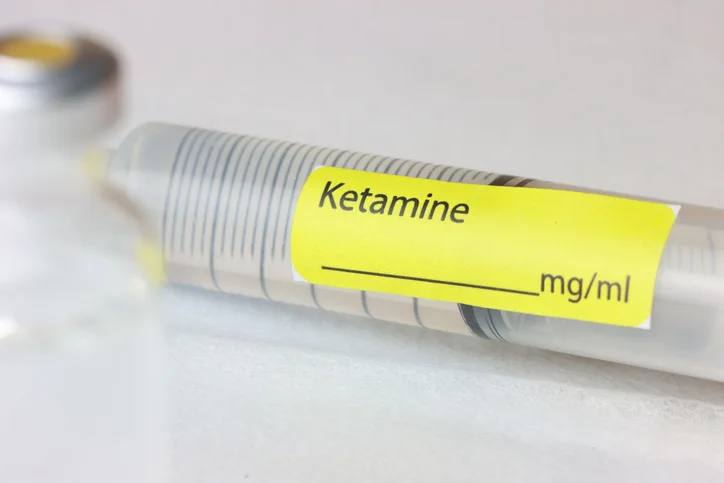
What is ketamine?
Ketamine is an anesthetic with high therapeutic and misuse potential. It may produce psychedelic effects at certain doses. It’s used to induce anesthesia, aid treatment-resistant depression, pain management, and treat addiction. Ketamine targets the NMDA receptor in the brain, which is responsible for things like memory and the brain’s communication between neurons.
Ketamine was originally developed as an alternative anesthetic to phencyclidine, also known as PCP or “angel dust.” PCP’s lingering symptoms after use made it the less-than-ideal anesthetic choice for medical professionals. Ketamine has 1/10th of the potency of phencyclidine and doesn’t cause significant respiratory depression– an important feature in anesthesia.
Ketamine causes a state known as “dissociative anesthesia,” where someone isn’t responsive and yet appears to be awake.
After its genesis in 1962, ketamine made its way into the party scene in the mid-1980s under the name “Special K.” It became a controlled substance in the US in 1999. Then, in the 2000s, researchers found that it could significantly improve treatment-resistant depression (more on this below).
It’s also been shown to rapidly treat patients with severe suicidal ideation.
Today, its therapeutic potential, true mechanisms of action, and associated risks are hotly debated. It’s possible to become addicted to and/or overdose on ketamine. There’s quite the balancing act between allowing greater access to patients who could benefit from it and keeping it from those who wouldn’t.
Eketamine vs Ketamine
There are two variations of ketamine: R-ketamine and S-ketamine. Chemically, they’re mirror images of each other. Combining these two variations creates esketamine, which has been shown to improve treatment-resistant depression.
SpravatoⓇ is an esketamine nasal spray and the only FDA-approved version for psychiatric use. It may only be administered in the presence of a healthcare provider. Otherwise, the FDA has approved ketamine for use as an anesthetic and otherwise classified it as a Schedule III controlled substance.
What does ketamine do?
Ketamine is what’s known as a “dissociative anesthetic.” It puts people under anesthesia at high enough doses. At doses preceding sedation, it may cause visual and other sensory hallucinations. This means that until the dose is high enough to make someone go under anesthesia, patients may experience a “trip.”
While this makes it popular recreationally, research suggests this mystical experience may help alcohol-dependent patients reduce their at-risk drinking.
Ketamine acts on the NMDA receptors. These receptors use the chemical glutamate to regulate things like memory, learning, and a variety of other functions. While we don’t have a full understanding of its mechanism, researchers suspect this interaction plays a part in ketamine’s depression-fighting abilities.
Glutamate has a long-standing association with several mood disorders, including anxiety and OCD, in addition to depression. When the NMDA receptor is overstimulated, there’s reason to suspect this leads to anxiety disorders. Ketamine acts to temporarily block the receptor from stimulation.
Effects of Ketamine
Some effects include:
- Dissociation
- Motion sickness
- Pain relief
- Temporary amnesia
- Sedation
- Immobility
- Anesthesia at high doses
- Hallucinations at sub-anesthesia doses
- Possible euphoria
Treatment-Resistant Depression
Treatment-resistant depression (TRD) is when traditional medications and treatments do not relieve someone’s depressive symptoms. Medications like Prozac and Lexapro, while effective for some patients, are sometimes not effective for everyone. There are not many options for people with TRD to improve their symptoms.
Patients with TRD may seek outpatient clinics that provide ketamine therapy. It may be administered with SpravatoⓇ, or with an intramuscular or intravenous injection. While not FDA-approved for psychiatric use, the intravenous route has been shown to be effective in causing “robust and rapid antidepressant effects.”
Ketamine is not recommended for patients with a history of schizophrenia or psychosis, as its dissociative effect could be distressing. Additionally, sometimes users may experience a “bad trip” or frightening hallucinatory experiences. For these reasons, it’s never used to initially treat depression.
Treating Addiction
There is evidence to suspect ketamine may help recovering alcoholics and heroin users maintain abstinence, respectively. However, more research is necessary to confirm this. In the addiction recovery process, many patients may face a period where they’re vulnerable to relapse. During this time, ketamine may mitigate that possibility.
However, ketamine can also be addictive itself. It may give a patient a feeling of euphoria, and if they’ve struggled with substance abuse in the past, they may end up with a ketamine use disorder.
Long-Term Effects of Regular Ketamine Use
Long-term effects of regular ketamine use may eventually cause:
- Flashbacks
- Poor sense of smell (from snorting)
- Mood and personality changes
- Depression
- Poor memory, thinking, and concentration
- Abnormal liver or kidney function
- Ketamine bladder syndrome (see below)
- Abdominal pain
- Needing to use more to get the same effect
- Dependence on ketamine
Ketamine Bladder Syndrome
Large, repeated doses of ketamine may eventually cause ‘ketamine bladder syndrome’ – a painful condition needing ongoing treatment. Symptoms include difficulty holding in urine or incontinence, which can cause ulcerations in the bladder.
Additionally, healthcare providers do not recommend this drug for people with high blood pressure or heart problems.
As the only recommended method of taking ketamine is in the presence of a medical provider, someone using it at home may not be able to help themselves if they experience a spike in blood pressure or cardiac arrest.
Can you overdose on ketamine?
Yes, it is possible to overdose on ketamine. Taking too much may result in symptoms such as chest pain, fluttering heart rate, dilated pupils, nausea, and vomiting. In a medical setting, it induces anesthesia without affecting breathing. However, someone may experience respiratory depression during an overdose.
It is rare for someone to overdose on ketamine alone. Combining it with alcohol can be toxic. Ketamine may stay in someone’s system for anywhere between 15 minutes to several hours.
The Future
Ketamine is a double-edged sword: On one hand, it has true potential to be a game-changer for millions of people who struggle with TRD and addiction. On the other, ketamine itself may be a source of addiction and is not to be taken lightly. As new research surfaces in the coming years, we may discover more about its effectiveness. Until then, ketamine should only be taken under medical supervision.
If you have any questions, please call the Missouri Poison Center at 1-800-222-1222. The center is open all day, every day, for poisoning questions and emergencies.
If you or someone you know has taken ketamine and is experiencing symptoms of an overdose, call 911 right away.
Frequently Asked Questions
While ketamine is used in veterinary medicine, including on horses, to provide anesthesia and pain relief, it’s also a valuable anesthetic and therapeutic drug for humans. The term “horse tranquilizer” can be misleading, as it implies that ketamine is exclusively used on animals or that it’s unsafe for human use, neither of which is true when administered properly by medical professionals.
No, ketamine is not an opioid. It works on different receptors in the brain than opioids. Ketamine primarily affects the NMDA receptor, while opioids primarily affect opioid receptors.
Yes, ketamine is legal when used for approved medical purposes and prescribed by a licensed healthcare provider. It is classified as a Schedule III controlled substance in the United States, meaning it has a potential for misuse but also has accepted medical uses. The FDA has approved ketamine for use as an anesthetic. SpravatoⓇ, an esketamine nasal spray, is FDA-approved for treatment-resistant depression but must be administered under the supervision of a healthcare provider.
Research is ongoing, but preliminary evidence suggests that ketamine may have the potential to treat certain anxiety disorders due to its effects on the NMDA receptor and glutamate activity. However, it’s not a first-line treatment for anxiety and is generally reserved for cases where other treatments have been ineffective.
Long-term misuse or abuse of ketamine can lead to various health problems, including bladder damage (ketamine-induced cystitis), abdominal pain, memory problems, and psychological dependence. The risks are significantly lower when ketamine is used responsibly under medical supervision.
If someone is experiencing a frightening or distressing hallucinatory experience (“bad trip”) while on ketamine, it’s important to stay calm and provide reassurance. Move them to a quiet, safe environment and monitor their vital signs. Seek immediate medical attention if they become agitated, confused, or experience any concerning physical symptoms.
Yes, there are certain conditions that may make ketamine use unsafe. These include uncontrolled high blood pressure, severe heart conditions, a history of psychosis or schizophrenia, and known allergies to ketamine.
Referencing content from this page? Please attribute the Missouri Poison Center with either of these links:
https://missouripoisoncenter.org/ or https://missouripoisoncenter.org/ketamine/
Suggested APA citation:
Hazelbaker, H.J. (2025, March 12). Ketamine: the double-edged sword. Missouri Poison Center. https://missouripoisoncenter.org/ketamine/