
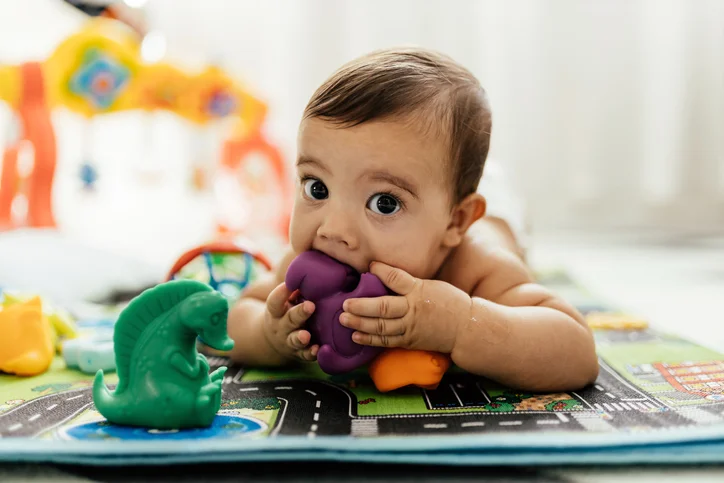
It’s one of those things at the back of your mind: Kids will pick up, chew, and swallow anything they can get their hands on. But it’s not until it actually happens that you find yourself asking, “Why… that?”
We’re going in depth on why kids swallow some of the darndest things, how this makes them more at risk for poisoning, some of the most dangerous and common poisons for kids, and what to do if your child gets into something that leaves you asking, Why?
Why are children the most at risk for poisoning?
Beyond simply putting far more things in their mouths than adults, there are a few developmental reasons why children are more at risk of being poisoned.
Hand-To-Mouth Behavior
As babies develop, they go through different stages of sensory exploration and self-soothing. The first is hand-to-mouth behavior, where they bring one or both hands to their mouths to chew, lick, or suck their hand or an object. It’s one of their earliest fine motor skills to manifest, beginning in the womb and lasting until they’re around three or four years old.
This behavior is normal and helps babies and toddlers learn a lot about themselves. But without knowing better, bringing their hand to their mouth may be harmful if they were just playing with an unsupervised tube of Icy Hot®.
Curiosity
A child’s need to explore and satisfy their growing brain is a driving force for many of their actions. They want to take in as much information as they can about the world. Shape, texture, and size are all discernible via the mouth. Swallowing an object can satisfy a toddler’s hunger… for knowledge.
This is an important milestone. However, much of what kids don’t know can hurt them.
Imitation
Little kids are always watching and reenacting what they see. If they watch their parents take vitamins/medicine every morning, they’ll want to imitate the behavior. And if medication bottles are left within reach, they may swallow a handful of mom or dad’s pills.
Look-Alikes
A drinking cup filled with glass cleaner sitting on the kitchen table looks exactly like a sports drink. If every other cup in the kitchen has been safe to drink, wouldn’t it make sense to a little kid that this should be as well?
Children are in the process of building their foundation of common sense. If edible things normally are in the kitchen, and they’ve never seen what a glass full of bleach looks like, then, in little kid logic, that glass should be safe.
Accidentally swallowing or drinking a poison that looks like a food/beverage is common even for adults, and more so for children. Check out our article on some of the most common poisoning calls for more information on this mix-up.
Why do children swallow objects?
In a nutshell, kids are on their way to understanding the world and what is edible, but they don’t have all the information yet. Out of curiosity and exploration, they put things in their mouths. Then, out of innate instinct, they swallow.
Tips to Prevent Kids from Swallowing the Darndest Things
It’s their guardians’ job to try to prevent accidental poisonings. While it’s not realistic to anticipate all emergencies, there are a few things you can do to minimize the risk of one:
- Be in a different room/out of sight from your child when taking pills.
- Store all medicines in a child-resistant cabinet out of reach.
- Opt for child-resistant packaging whenever possible
- If they’re old enough, explain to your kids that some medicines are safe for adults, but not for them.
- Heed the age warnings on toys/games.
- Take care to keep small objects out of the child’s reach.
- Teach older children to keep choking hazard objects away from younger siblings
- Store chemicals in a different area from food. Never set down a cup or bowl of cleaner in a space where a child might assume it’s edible, like a nightstand, on top of a dresser, or on the kitchen table.
- Don’t call medicine “candy.”
How do I tell if my toddler ate something dangerous?
There are a few signs that your child swallowed something they shouldn’t have:
- Stomachache or abdominal pain
- Chest pain
- A feeling like something is stuck in the throat
- Difficulty breathing or a change in breathing
- Difficulty swallowing
- Drooling
- Vomiting
- Coughing
- Gagging
- Refusing to drink or eat
- Bloody saliva
Top 10 Most Likely Things for Children Under 5 to Swallow
These are the most common poisons children swallow. We’ve linked each to a relevant article with more information:
- Cleaning Products (see also oven cleaner and glass cleaner)
- Pain Relievers
- Cosmetics
- Foreign Bodies/Toys
- Dietary Supplements/ hormones
- Antihistamines (Claritin® and Benadryl®)
- Vitamins
- Pesticides
- Topical Products (like antibiotic ointment or baby lotion)
- Plants
3 Dangerous Trending Poisons for Children
All of these merit a call to the Missouri Poison Center at 1-800-222-1222, even if you only suspect your child swallowed it.
Disc Batteries
Visits to the emergency room due to disc batteries have increased quite a bit since 2010. There are three ways one of these batteries may injure a child:
- It may get lodged in the food pipe or airway
- It may give off an electrical current and burn their throat or stomach
- Battery contents can leak into the stomach
For more information, read our blog on disc batteries here.
Water Beads
These are small, hyper-absorbent beads. If a child swallows one, they may expand in the body and cause a bowel obstruction. We have a more detailed article on water bead dangers here.
Strong Magnets
If a child swallows more than one magnet, they can attract each other inside the body and pinch sections of the intestines. This may cause a hole in the intestines, injury, infection, and death. We have another write-up here with more information on magnets.
What do I do if my child swallowed something but isn’t choking?
If your child swallowed something they shouldn’t have and is not choking, assess them for the symptoms above. Wipe out their mouth with a clean, soft cloth in case there is some of the substance left in the mouth. Call the Missouri Poison Center at 1-800-222-1222. We’re open 24 hours a day, 7 days a week for poisoning emergencies and questions.
If your child is having trouble inhaling or making a wheezing or whistling sound as they breathe, call 911 right away.
Don’t Forget: Kids Put Things in the Darndest Places
Children not only swallow all kinds of things, but also may shove things up their nose or in their ears. If your child is showing symptoms like discomfort, pain, or odd drainage in these areas, that’s a sign they might have a foreign object there.
If you suspect your child has put something strange somewhere it does not belong, don’t hesitate to give us a call. We’re open every day to answer your poison-related questions.
Frequently Asked Questions
Yes, some items, like small plastic pieces, may pass naturally. But dangerous items like batteries, magnets, or sharp objects can cause severe harm and require immediate medical guidance.
Sometimes, depending on the scenario. Kids often repeat behaviors, especially if driven by curiosity or imitation. Caregivers should be extra cautious after a first incident.
Toddlers between 1 and 3 years old are at the highest risk. At this age, curiosity and hand-to-mouth exploration peak, but they lack the awareness to know what is harmful
No. Inducing vomiting can cause additional injury, especially with sharp objects, chemicals, or batteries. Read our blog on outdated at-home poison treatments for more information on why that is.
Choking happens when the airway is blocked, while poisoning results from the body absorbing a harmful substance. Some items, like small toys or pills, can pose both risks.
Referencing content from this page? Please attribute the Missouri Poison Center with either of these links: https://missouripoisoncenter.org/ or https://missouripoisoncenter.org/kids-swallow-the-darndest-things-why-that-is-what-to-do
Suggested APA citation:
Hazelbaker, H.J. (2025, October 8). Kids swallow the darndest things: Why that is & what to do. Missouri Poison Center. https://missouripoisoncenter.org/kids-swallow-the-darndest-things-why-that-is-what-to-do