
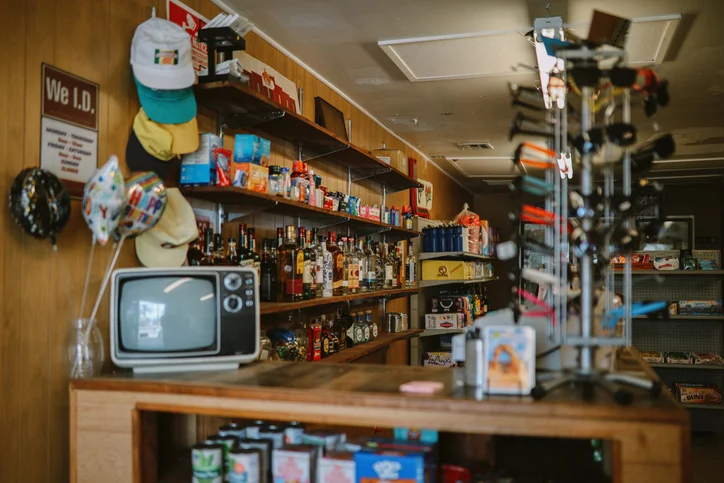
We’ve all seen the little dietary supplements at gas stations: the ones that are supposed to give you energy while driving or improve your immune system. But some dietary supplements aren’t what they seem. Clever packaging allows drugs that elicit mood-altering responses to hide amidst the gas station shelves.
What is a gas station pill?
Gas station pills are the types of supplements you can find at mini-marts or shops where you pump your gas. Sometimes, these “supplements” are intentionally misleading. They may come in different forms like liquids, powders, etc. While some may help with energy or give you a dose of B vitamins, others harbor potentially addictive or destructive ingredients.
Gas stations are nontraditional places to purchase supplements. They are not robust like a grocery store or well-regulated like a pharmacy, which allows companies to sell potentially dangerous substances in plain sight.
When a product is sitting on a shelf at a store, casual buyers don’t often question whether it’s safe. In the United States, it often feels like products filter through several layers of testing before someone confirms their safety and distributes them. Because of this, many unsuspecting people purchase gas station pills, believing there’s no risk.
Food and household items sold at grocery stores and the like are seldom dangerous— why would something harmful be at a gas station?
This is exactly how these substances “hide in plain sight.” The FDA regulates a number of products, but the line blurs when it comes to dietary supplements.
What does it mean for a product to be regulated by the FDA?
When something is “FDA approved,” the FDA has considered it safe and effective for its intended use. It’s gone through rigorous testing, and the FDA has determined that its benefits outweigh its associated risks.
If something is “FDA regulated,” that just means it’s under the FDA’s jurisdiction, which extends to a number of things, like food, over-the-counter and prescription drugs, vaccines, cosmetics, and dietary supplements. The FDA must approve high-risk items like pace-makers and prescription drugs, but FDA approval for the safety and effectiveness of dietary supplements and cosmetics is not their responsibility but falls upon the manufacturers of those products.
Under the Dietary Supplement Health and Education Act of 1994 (DSHEA), as long as a supplement contains ingredients that are “generally recognized as safe,” then it may be marketed without FDA approval.
However, some products on shelves at gas stations include ingredients that are not “generally recognized as safe.” Drugs like phenibut, kratom, and tianeptine may trigger an opioid-like response in consumers. This is dangerous if the consumer has a history of addiction or is in recovery from opioid use.
However, their presence at non-traditional health shops (convenience stores) allows them to slip under the radar as “dietary supplements.” Once a supplement is on the market, the FDA may intervene if it’s misbranded.
Examples of Gas Station Pills That May Be Harmful
Let’s take a look at some synthetic drugs and substances you might find hiding at your local gas station. Some states have banned a few of these substances, but buyers still stumble across them from time to time. These substances are most dangerous when combined with each other or with alcohol:
Feel Free
You may find a small, blue bottle covered in relaxing print on the shelf of your local gas station called Feel Free. It’s distributed by the company Botanic Tonics. However, Feel Free contains kratom, a potentially addictive substance that stimulates the same area of the brain as opioids.
We have a detailed write-up on kratom here, but the gist is this: Yes, it’s naturally derived and has been around for centuries. But although it may work anecdotally for some users, it has great potential to be a new source of addiction for many.
The FDA has determined kratom to be a “drug of chemical concern”— in other words, it’s not recognized as safe for use in a dietary supplement.
Do not be fooled by Feel Free’s promises and packaging. Watch out for this supplement at your local gas station or mini mart.
Phenibut
Phenibut is a central nervous system depressant. It works similarly to benzodiazepines (think Xanax and Klonopin). It may have labels that say “anxiety reliever,” “mood enhancer,” or “smart drug.” Phenibut may be addictive, which is why it’s important to understand what it is beyond its marketing.
Additionally, it is possible to overdose on phenibut. A phenibut overdose manifests similar symptoms to that of an opioid overdose. However, opioid reversal drugs like Narcan do not work on phenibut, making this supplement very dangerous.
There is a chance that phenibut at low doses may help people who suffer from anxiety. However, there’s little research on its long-term effects, and more will be necessary to fully understand it.
Akaumma
Akaumma is a West African seed that’s been used for centuries to treat fevers, as it has antimalarial properties. It interacts weakly with the brain’s opioid receptors, so people will use it to manage opioid withdrawal.
While akaumma is not an opioid and doesn’t produce an intense high, it’s an important gas station pill to be aware of. Someone struggling with addiction may have negative symptoms if they unknowingly consume the seed.
Phrenze
Phrenze or Phrenze Red is a combination of kava extract and phenibut. Taking too much can result in an overdose. It may produce an opioid-like effect for users, but like phenibut, opioid-reversal drugs do not work on it.
Phrenze may be marketed as a mood enhancer. It’s possible to become addicted to it and suffer from withdrawal symptoms. Some people have turned to using Phrenze as a replacement for tianeptine.
Erectile Dysfunction Pills
The supplements claiming to be a quick fix to erectile dysfunction (ED) may contain undisclosed amounts of sildenafil or tadalafil— the main ingredients in Viagra and Cialis. This is dangerous as it could cause a drop in blood pressure, impacting those with underlying health conditions.
Even the ED pills claiming to be safe herbal alternatives may be dangerous. Blood clotting, stomach aches, and diarrhea are just a few of the possible symptoms.
There was one instance of a man who used one of these “gas station sex pills” and had to go to the emergency room to drain the blood from his erection. Upon further investigation, the pill he took contained a large amount of sildenafil that was not listed as an ingredient.
Other Gas Station Supplements
There are other harmful gas station pills that have been on the Missouri Poison Center’s radar. Each link will take you to an in-depth article on that substance:
How do I keep myself safe from gas station substances?
It may feel overwhelming to learn about companies “hiding” drugs on shelves. There are a few ways to keep yourself from accidentally consuming something with negative consequences.
Check Ingredients
Although gas station pills are unregulated— so there’s no guarantee what chemicals are inside— they do have some ingredients listed to communicate to regular buyers. If something innocuous claims to be “anxiety-reducing,” check the package for an ingredient like phenibut.
Additionally, the packaging for many of these gas station supplements is bright and colorful as they try to market to teens and young adults. Look out for the words “dietary supplement” and images of cannabis leaves, droppers, or other substances on the packaging.
Be Skeptical of Claims
If a product claims to eliminate anxiety— will it? Or will it offer short-term relief? Don’t let something with claims like “brain-boosting,” “mood enhancing,” or “increase cognition” fool you. These claims have not been properly evaluated for accuracy.
Talk to Your Healthcare Provider
If you’re looking to begin taking a supplement, consult with a healthcare provider first. Even dietary supplements you find in traditional drug stores may negatively interact with other medications. If you have pre-existing health conditions, consider speaking with a professional before adding a new drug to your routine.
Have a question we didn’t cover?
If you or someone you know often patronizes the gas station’s menagerie of quick fixes, the Missouri Poison Center is open 24/7 to answer any questions you might have. Every call is confidential and free. Speak with one of our experts at 1-800-222-1222.
If someone you know has taken a substance and is nonresponsive or short of breath, call 911 immediately.
Frequently Asked Questions
Yes, most gas station pills are technically legal because they are marketed as dietary supplements. However, some contain unregulated or hidden ingredients that may be banned in certain states or pose serious health risks. Their legality does not necessarily mean they are safe.
Gas station pills fall into a regulatory gray area. The FDA only steps in after a product is found to be unsafe or mislabeled. Since supplements do not require pre-approval, many dangerous products remain on the market until enough adverse effects are reported.
Yes, some gas station pills contain substances like phenibut, kratom, or tianeptine, which can lead to dependence or withdrawal symptoms. These substances can mimic opioids or other addictive drugs, making them especially risky for individuals with a history of substance abuse.
No, dietary supplements—including those found at gas stations—do not undergo the same rigorous testing as prescription medications. There is no guarantee that what’s listed on the label accurately reflects what’s inside, making them unpredictable and potentially harmful.
If you experience unusual side effects, call the Missouri Poison Center at 1-800-222-1222 for immediate guidance. If you or someone else becomes nonresponsive or has trouble breathing after taking a gas station pill, seek emergency medical attention by calling 911.
Referencing content from this page? Please attribute the Missouri Poison Center with either of these links:
https://missouripoisoncenter.org/ or https://missouripoisoncenter.org/gas-station-pills/
Suggested APA citation:
Hazelbaker, H.J. (2025, April 07). Hiding in plain sight: gas station drugs. Missouri Poison Center. https://missouripoisoncenter.org/gas-station-pills/