
It began with prescription pain medications, such as oxycodone and hydrocodone, then it was heroin followed by fentanyl. Now we’re at the beginning of the next wave of the opioid addiction evolution: 7-OH and other synthetic products.
The Missouri Poison Center has been receiving an increasing number of calls about abuse, overdose, and withdrawal from this new, highly addictive opioid. But just like the opioid crisis, drug dealers’ transactions have evolved, too. No longer does a purchase need to be secretive, it can be from the comfort of your home. You can order 7-OH conveniently to your door.
You can prevent an exposure by knowing what to look for and why 7-OH is such a problem.
What is 7-OH?
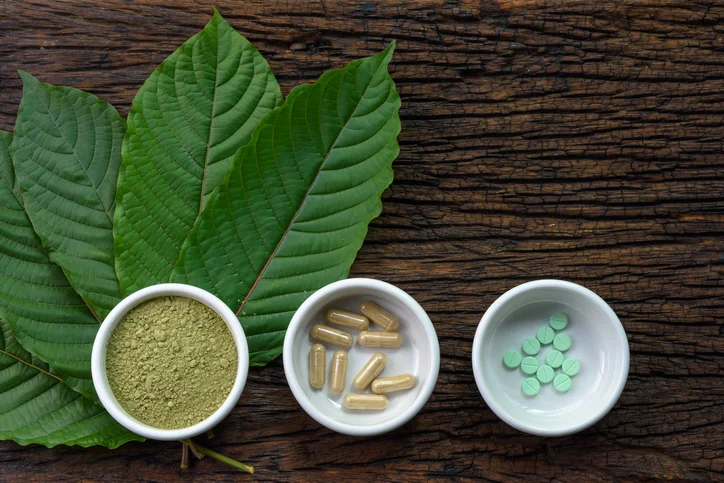
7-OH is a chemical that’s part of the kratom plant (Mitragyna speciosa). It’s one of many alkaloids that occur naturally within the plant. People have found a way to semi-synthesize the chemical in labs to create products with higher concentrations of it. 7-OH is significantly more potent than morphine, meaning addiction and overdose are highly possible with this new drug.
Its full name is 7-hydroxymitragynine. You might find it sold in stores like gas stations, vape shops, or online. It goes by other names, like mitragynine pills, 7-hydroxy, 7-OHMG, 7, or 7-hydroxy mitragynine. Look for the number 7 emphasized somewhere in the packaging.
Is it an opioid?
Yes, 7-OH is an opioid. It activates the mu-opioid receptor in the brain, gives the user a high, is addictive, comes with distressing withdrawal symptoms, and has a high risk of overdose.
Overdose symptoms include respiratory depression and loss of consciousness. Naloxone (brand name Narcan) may reverse the effects of a 7-OH overdose. To learn more about Narcan and overdoses, read our more detailed article here.
What is the difference between “natural kratom” and 7-OH?
There are many active compounds in natural kratom that may affect the body. Two of the most researched ones are mitragynine and 7-hydroxymitragynine. These contribute to the high people feel when using kratom. There’s not a lot of either in a kratom leaf. In fact, some experts estimate there’s a maximum of 2% 7-OH in a traditional kratom product.
Because of this, extracting 7-OH from a natural product isn’t very efficient. So, the 7-OH is synthesized through a chemical process. Mitragynine in a product is isolated, purified, and then sold in bulk. Laboratories purchase this, then turn it into 7-OH. Because it’s derived from a natural source, 7-OH is considered “semi-synthetic.”
The FDA said in a statement that it is focusing more on 7-OH than natural kratom products. This is because 7-OH products are made to be more potent. If you’d like to learn more about kratom, read our more in-depth article here.
Is the FDA banning 7-OH?
The FDA is restricting 7-OH products by working to get it scheduled as a controlled substance under the Controlled Substances Act. The reasoning comes down to its addictive potential, danger, and misguided labeling.
7-OH is addictive, which is dangerous for someone with a history of substance use. The packaging on these products is friendly, inviting, and deceptive. In somewhere like a gas station convenience store, it looks like candy, gum, or a small energy drink. Unsuspecting people may purchase a small bottle of 7-OH without really knowing what it is.
“Natural kratom” products may be fortified with more 7-OH than it says on the package. So someone who isn’t looking for 7-OH might find themselves using it.
Children may be attracted to the bright packaging or mistake the product for something to eat; exposure in a child may be more severe than in an adult due to their small body size and the amount of 7-OH in the product. Additionally, there are cases of people unintentionally overdosing by unknowingly mixing 7-OH products with other similar products or interacting with their prescribed medication.
7-OH has no approved medical use. There is no FDA-approved dietary supplement or drug that has 7-OH in it.
How do I know if a natural kratom product has 7-OH in it?
The short answer is that you don’t. Kratom— natural, synthesized, or otherwise— is unregulated. It’s neither a drug nor a dietary supplement. Therefore, the companies selling “natural kratom products” aren’t held to the same standards of pharmaceutical companies.
Granted, a physical kratom leaf is unlikely to be altered with 7-OH. That being said, kratom still has addictive properties and is not recommended when trying to overcome a substance use disorder.
Spotting Products with 7-OH
Be aware that 7-OH begins as mitragynine. A quick internet search for 7-OH pills may take you to some sites that sell “mitragynine pills” that are an “advanced alkaloid” and promise “faster absorption.” This may be a way marketers are getting around disclosing 7-OH in a product, as these are all qualities of 7-OH.
Other products may have on the packaging:
- “Mitragynine pills”
- “Kratom alkaloids”
- The number 7 (7Stax, Energy 777)
- The omega symbol 𝛀 (Chew-𝛀MZ, 7𝛀, 𝛀H, 𝛀MZ-Conez)
How To Prevent Accidental 7-OH Exposure
- Avoid purchasing products with claims like “unlimited energy” or “improved intelligence.”
- Be skeptical of online supplements that don’t readily disclose their ingredients.
- Be skeptical of online supplements with any of the packaging descriptions listed above.
- Keep all medications and supplements stored in child-resistant cabinets, up, away, and out of reach.
- Small children mistake the candy-like packaging of products for real candy. If old enough, inform your children of these drug dangers. Read more about gas station dangers in our helpful article here.
Have questions? Call the Missouri Poison Center
Every few months, it seems like there’s some new danger lurking on convenience store shelves. It’s an unsettling feeling, but the best way to prevent an exposure is to equip yourself with knowledge.
If you think you or someone you know has been exposed to 7-OH, call the Missouri Poison Center at 1-800-222-1222. You can also call with any of your poison-related questions.
If you or someone you know has taken a product and is having symptoms like slow breathing or seizures, call 911 immediately.
Frequently Asked Questions
The effects of 7-OH depend on your body size, tolerance, and other factors. The amount you take and the form it’s in (like a shot, powder, or pill) will influence absorption. It takes about an hour for it to reach its peak “high,” then it may last for about 5 or 6 hours.
Mixing 7-OH with other substances can significantly increase the risk of overdose. Combining it with medications that also depress the central nervous system, like other opioids, benzodiazepines, alcohol, or certain sleep aids, can lead to slowed or stopped breathing, coma, seizures, or cardiac arrest.
Even medications that are safe when taken alone may become dangerous when combined with 7-OH. Because products containing 7-OH are often mislabeled or inconsistent in strength, the risk of accidental overdose is higher.
Yes. Because it acts on the brain’s mu-opioid receptors, repeated use can lead to physical dependence and addiction. Over time, the body may require higher doses to achieve the same effects (tolerance), which increases the risk of overdose.
If someone who uses 7-OH regularly stops suddenly, they may experience withdrawal symptoms. These may include anxiety, muscle aches, sweating, nausea, vomiting, diarrhea, irritability, insomnia, and intense cravings. Withdrawal from opioid-like substances can be extremely uncomfortable, possibly life-threatening and should be managed by a healthcare professional.
Referencing content from this page? Please attribute the Missouri Poison Center with either of these links:
https://missouripoisoncenter.org/ or https://missouripoisoncenter.org/7-OH
Suggested APA citation:
Hazelbaker, H.J. (2026, March 31). 7-OH: The next phase of the opioid crisis. Missouri Poison Center. https://missouripoisoncenter.org/7-OH