
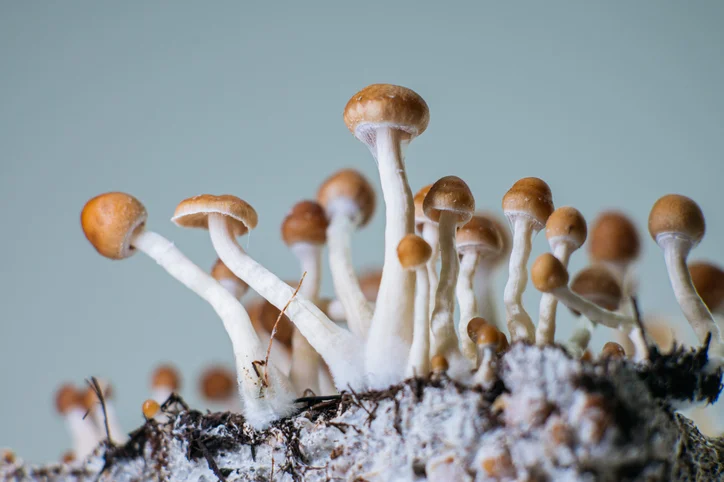
The war on drugs began in many of our lifetimes. “Magic mushrooms,” or mushrooms containing the psychedelic chemical psilocybin, continue to be surrounded by the negative stigma garnered back in the 1960s. As new research emerges suggesting the potential for psychedelics to treat a variety of mental ailments, will we be able to separate the culture surrounding mushrooms from their medical potential?
What Are Magic Mushrooms?
Magic mushrooms, or “shrooms,” are an informal group of fungi that produce psychedelic or hallucinogenic effects when ingested. They contain a chemical known as psilocybin, which turns into psilocin in the body. This produces the “trip” many people experience.
Shrooms act in a similar way to lysergic acid diethylamide or LSD, another hallucinogenic. Both of these drugs target the 5HT-2A receptor— a place in the brain that helps moderate perception, emotion, learning, memory, and neurogenesis and is implicated in certain mental disorders.
Magic mushrooms grow organically in the world, mostly in the tropics/subtropics and occasionally in temperate regions. Like most other mushroom species, they thrive around decaying wood, soil, or even cow dung. There are some synthetic versions of shrooms.
While magic mushrooms came onto the pop-culture scene in the 1960s and 70s, they have actually been around for millions of years, emerging right around the extinction of the dinosaurs. More recently, there is evidence of Mesoamerican cultures using magic mushrooms for important spiritual and healing ceremonies.
Regardless of time in history, shrooms are associated with an altered state of mind and behavior. Many people claim to have life-changing journeys while under their influence, while others have stressful or traumatic experiences.
Are Magic Mushrooms Legal?
Magic mushrooms are considered a Schedule I controlled substance in the United States and are not legal for use. However, Oregon and Colorado have decriminalized psilocybin mushrooms. In Colorado, they cannot be sold, but it is legal to grow them.
Despite their legal status, people sometimes take mushrooms in the form of gummies, teas, soups, capsules, or powders. Synthetic mushrooms may come in powdered form.
Sometimes, children will mistake mushroom gummies for candy. Given their small body mass and sensitivity, accidental ingestion should be taken seriously. If you suspect your child has eaten a magic mushroom gummy or other product, contact the Missouri Poison Center right away.
Types of Mushrooms
The most common type of psychedelic mushroom is Psilocybe cubensis. One of the main dangers of magic mushrooms is confusing them with poisonous ones. Given shrooms’ legal status, some people illicitly gather magic mushrooms in the wild; if not properly identified, one could hurt themselves with a truly poisonous mushroom.
It is important not to collect and consume mushrooms– magic or otherwise– without properly identifying the variety. Some mushroom species are genuinely poisonous to consume, like the death cap (Amanita phalloides), false morel (Gyromitra esculenta), and destroying angel (in the Amanita genus).
It is also possible to falsely identify a psilocybin-containing mushroom as a food-grade one. This can be a distressing experience for an unassuming consumer. Be sure to go through a proper mycology identification course/training before eating any mushrooms you collect yourself.
Magic Mushrooms and Mental Health
There is a growing body of research that suggests magic mushrooms could be beneficial to people suffering from disorders like depression, anxiety, and several addiction and abuse disorders.
Depression
Treatment-resistant depression (TRD) is a serious mental ailment that many people suffer from. You can read more about it in our blog on ketamine. It may take years before someone discovers a method that works for them. A few studies have shown magic mushrooms as a promising solution, but one that would need to undergo further research to confirm.
In one recent study, patients who took single 25mg doses of synthetic psilocybin significantly improved their TRD symptoms, but with some adverse effects. This along with other studies, like a related psilocybin study, have built a body of evidence supporting the potential for magic mushrooms to be a possible therapeutic treatment for TRD.
Anxiety
A meta-analysis found there to be a significant improvement in anxiety and depression after magic mushroom use across several studies. Additionally, shrooms have a promising body of evidence suggesting their acute effectiveness against obsessive-compulsive disorder or OCD.
This is balanced with the knowledge that some people experience heightened anxiety or even panic as a side effect while on shrooms.
Shrooms and Alcohol Use Disorder
In a 2022 study focusing on alcohol use disorder (AUD), researchers found that psychedelic mushrooms paired with talk therapy decreased participant’s heavy drinking days over a 32-week period. This is promising evidence of possible future treatment for AUD.
Magic mushrooms are not known to be addictive in the same way nicotine or opioids are. Some researchers suggest that unpleasant side effects of shrooms, like headaches and nausea, may be somewhat of a deterrent from abuse.
Can You Overdose on Magic Mushrooms?
It is possible to overdose on magic mushrooms, but it may look different than an overdose from a drug like opioids. It is rare for magic mushrooms to cause a life-threatening overdose.
Dangerous situations may arise if shrooms are mixed with another drug or if someone on shrooms behaves in a harmful manner towards themselves or others.
It is more likely that too-high doses of magic mushrooms would result in someone experiencing a “bad trip.” This is when the hallucinations and psychedelic sensations cause someone to panic, evoke bad or unwanted memories, or see frightening visuals. Even on low doses, a user may still have a bad trip.
Magic Mushroom Overdose or “Bad Trip” Symptoms
- Excessive vomiting
- Powerful or frightening hallucinations
- Psychosis
- Panic attacks
- Paranoia
- Seizure (rare)
- Coma (rare)
Effects of Magic Mushrooms
The intensity of psychedelic mushrooms depends on a few factors, such as body weight, tolerance, and the type of magic mushroom consumed. This is why it is important to keep all substances safely stored away from children— they are smaller and less tolerant and may have an unwanted, intense experience with accidental ingestion.
There are general symptoms of a trip on magic mushrooms, including:
- Visual/auditory hallucinations
- Yawning
- Nausea
- Vomiting
- Altered mental state
- Anxiety
- Panic
- Euphoria
- Pupil dilation
- Headaches
What to Do if Someone Is Having a Bad Trip on Magic Mushrooms
If someone is having a bad trip on mushrooms, take them to a calm, quiet place. The setting is the physical environment someone is tripping in, while the set is their mindset going into the trip. Both influence the trip, which is why accidental ingestion without prior mental readiness can be so distressing.
While you can’t control someone’s set, you can control the setting.
If someone you know who has taken mushrooms is experiencing panic or fear, the best thing you can do is make the setting as calm as possible. Do not say anything that might make them more anxious, and call the Missouri Poison Center if symptoms like labored breathing, pale/clammy skin, or nonresponsiveness occur.
How Long Do Magic Mushrooms Last?
It takes about thirty minutes to an hour for mushrooms to start having an effect. Depending on the dose, a trip may last anywhere between three to six hours. It can be longer or shorter, given someone’s tolerance and the mushroom variety consumed.
Are Magic Mushrooms Safe?
Magic mushrooms are not recommended for people with a history of severe bipolar disorder, schizophrenia/schizoaffective disorder, and for those with borderline personality disorder.
Additionally, magic mushrooms are illegal in most states and, therefore, not regulated. There’s no guarantee that mushrooms from an illicit distributor are not crossed with another more dangerous substance. It’s also difficult to determine the strength of the psilocybin concentration in a magic mushroom product.
Final Thoughts
While there is a lot of potential for the therapeutic use of mushrooms, research is just at its start. There is still much we don’t know about magic mushrooms. There’s no way to guarantee what someone’s reaction will be to psychedelics, and as they are illegal and unregulated, it’s dangerous to gamble what could be crossed with them.
If you have questions about shrooms, contact the Missouri Poison Center. We are open 24 hours a day, 7 days a week, to answer your poison-related questions.
If you or someone you know has taken magic mushrooms and is experiencing negative symptoms like vomiting or paranoia, call us at 1-800-222-1222.
If someone has taken shrooms and is experiencing labored breathing or is nonresponsive, call 911 immediately.
Frequently Asked Questions
Yes, using magic mushrooms repeatedly over a short period can cause the body to become less sensitive to their effects, meaning you may need to take more to feel the same impact. This tolerance may fade after a break in usage.
HPPD is a rare condition where people experience ongoing visual disturbances or “flashbacks” long after the effects of magic mushrooms have worn off. These symptoms can last weeks or even longer.
Magic mushrooms, especially when dried, can lose their strength over time. Properly stored dried mushrooms may last up to a year but will gradually become less potent. Fresh mushrooms spoil much more quickly.
In most of the United States, possessing or growing magic mushrooms is illegal and can result in criminal charges. Some states and cities have reduced penalties, but selling or distributing mushrooms remains illegal.
Magic mushrooms typically have slender stems and rounded caps that may bruise blue when handled. They are sometimes called shrooms, boomers, or caps. Misidentifying mushrooms can be dangerous.
Referencing content from this page? Please attribute the Missouri Poison Center with either of these links:
https://missouripoisoncenter.org/ or https://missouripoisoncenter.org/magic-mushrooms
Suggested APA citation:
Hazelbaker, H.J. (2025, June 24). What are magic mushrooms and can you overdose? Missouri Poison Center. https://missouripoisoncenter.org/magic-mushrooms