
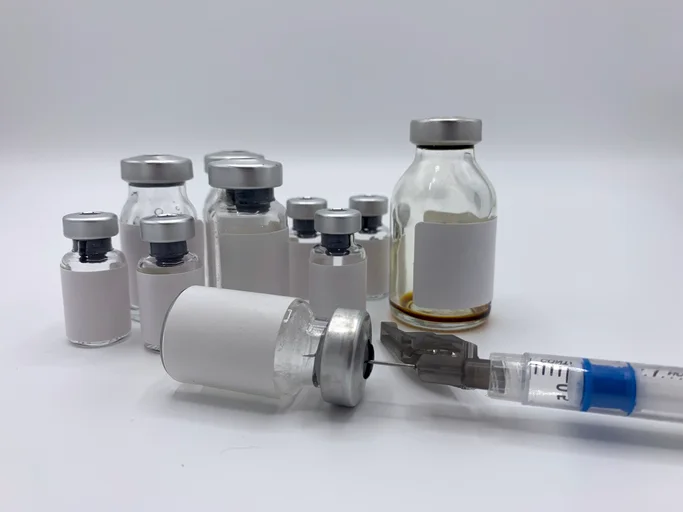
Most injectable peptides are not approved for human use, and yet are available on the gray market in online stores. This poses potential long-term health problems and immediate overdose risks for users, especially teens and young adults who are finding ways to use these unregulated products.
Social media is pushing peptide stacking as the newest wellness trend. And while there is some evidence that peptides may be helpful, there is a gap between the goals of peptide stacking and the available evidence that supports these benefits. In other words, there is a difference between a drug showing promise and a strong study proving its true helpfulness.
What are peptides?
Peptides are small chains of amino acids and the building blocks of proteins. A combination of 2-50 amino acids (which are small chemical units) creates 1 peptide. When peptides form connections with more peptides, they create a protein. There are numerous combinations of amino acids, peptides, and proteins that have lots of different functions in the body.
Some peptides can be made synthetically. For example, insulin is a peptide that is naturally made in the body and can also be synthesized in a lab. People with Type 1 diabetes can use insulin injections to replace the insulin their bodies don’t make. Semiglutide is another synthesized peptide, used in injectable medicines like Ozempic. You can read more about Ozempic in our blog here.
While most peptides are produced naturally by our bodies or obtained through food, they may also be available as supplements, powders, ointments, and injectable medicines.
What do peptides do?
Not all peptides go on to make large proteins. Some function as biological signalers, transmitters, enzymes, hormones, and more. There are millions of combinations of peptides, but not all of them are biologically significant.
Your body naturally makes peptides in certain amounts. Pushing that past its limit could potentially have long-term effects. The problem is that at this time these effects are not fully known.
Some types of peptide supplements may help combat some aging processes in the body. One good example of this is how oral or topical collagen supplements may help with wrinkles.
There is promise that certain peptides could be used in the future for some medical treatments. However, in the wellness and anti-aging industry, many people are using injectable peptides in a way that is unregulated, dangerous, and with very little evidence supporting the benefits of use.
What is peptide stacking?
Peptide stacking is when someone takes multiple different peptide injections to achieve an “optimized” effect. The combination of peptides is called their “stack.” Users purchase peptides from online sources and discern their own doses. This is dangerous for a number of reasons.
Often, users are seeking a goal such as weight loss, increasing muscle mass, improving memory, reducing anxiety, or improving longevity. They turn to peptides that naturally complete some of these functions (or are perceived to) and inject more highly concentrated amounts. Peptides can influence important processes in the body. The problem is that their benefits are not fully supported by evidence.
Things become especially uncertain when multiple peptides are combined. Since some of the studies on peptides were not completed we don’t know if there are contraindications with certain medications.
There are online claims praising the effectiveness of injectable peptides, but these are all anecdotal. They often come from health and fitness bloggers, but there is a chance these influencers feel good after using the peptides because they are already healthy: eating well and exercising regularly. They could think the peptides work when there’s perhaps something else making them feel well. We do not know this for sure until we study the peptides further.
Is it safe to stack peptides?
No. Most online injectable peptide sales marketed as supplements are unregulated by the U.S. Food and Drug Administration (FDA) and not approved for any use. This means that there is no guarantee that the product is safe to be injected into the body, posing a high risk of contamination.
It is especially unsafe when teenagers get ahold of injectable peptides. Teenagers are not finished growing, and introducing a peptide that stimulates their growth hormones may lead to irreversible damage to their health. Teens may receive targeted ads on social media or come across wellness accounts that encourage peptide use. Although social media promises that these are safe, teens may be at a higher risk for adverse effects from unregulated peptide use.
Injecting multiple peptide compounds increases the risk even more due to limited scientific studies, lack of safety testing, and no guarantee the ingredients are what is advertised. Lastly, there is very little if any research into how these injections interact with one another.
Sometimes, a company will try to bypass laws by selling “research-use only” peptides with the intention that people will be injecting them. When something is for research use, that means it’s okay to use it in a science lab, but it is not of a good enough quality for consumption/human injection. Read this FDA statement for a real example.
Additionally, a new user who’s trying to calculate their own dose without help from a trusted healthcare provider may accidentally underdose or overdose themselves. If someone has never been taught how to self-inject safely and wishes to try peptide stacking, they may make mistakes with serious consequences.
More Reasons Why Peptide Stacking Is Unsafe
- The companies selling these products do not have to follow any guidelines that guarantee them to be of high quality.
- The injectors might not be sterile, risking bacterial infection.
- They could have unknown ingredients.
- They could be stored improperly, causing the peptide to deteriorate.
- Using peptides may lead to hormonal imbalance, risking long-term health effects.
- The body could see them as foreign invaders and have an allergic reaction.
- They may be contraindicated with other medications.
Common Peptide Stacks Sold Online
Here are some popular peptide stacks circulating the internet to be aware of:
Wolverine Stack
One popular stack is known as the “Wolverine Stack.” This is a combination of the BCP-157 and TB-500 peptides. Both of these are research grade and not meant for human consumption.
The goal of this stack is to speed up the healing process, whether that’s recovering from an injury or a workout. Although the sites selling these peptides claim they are “science-backed” they are not. The studies initially looking into these peptides were stopped, likely due to insufficient evidence to continue.
CJC-1295 + Ipamorelin
Another is the combination of CJC-1295 + Ipamorelin. This stack is meant to increase the growth hormone that the pituitary gland makes. The idea is to fight the aging process, increasing muscle mass and decreasing body fat.
Ipamalorelin has limited research on humans. CJC-1295 has been studied in healthy adults, and while it has been shown to stimulate the growth hormone, healthy adults do not need elevated levels of growth hormones. There are risks involved in doing this, including injection-site redness, itching, or irritation, temporary fatigue or drowsiness, headache, nausea, mild water retention and bloating.
MK-677
Some people online call this “exercise in a bottle.” It’s designed to boost growth hormone levels in the body. MK‑677 is often lumped in with peptides, but it’s actually a pill that acts like them. It works by increasing growth hormone and insulin like growth factor (IGF‑1). It is not approved for human use and may cause similar side effects to CJC‑1295 and ipamorelin.
Final Thoughts
Not all peptides are unsafe, but injecting yourself with unregulated ones may cause harm. Advocating for your health is best done with the assistance of a healthcare provider not online sources. Even in some peptide-stacking Reddit threads, there are users who urge others to seek the guidance of a healthcare provider. So even in the gray market community, users insist on finding reputable opinions offline.
Talk to a trusted healthcare provider. If you have any questions about peptides, stacking, or injections, call the Missouri Poison Center at 1-800-222-1222. We are open all day, every day to answer your poison-related questions. Every call is fast, free and confidential.
Frequently Asked Questions
No. Peptides and steroids are two different types of substances. Peptides are made of amino acids and often act as signals in the body, while steroids are a group of organic compounds with a unique structure. In the body, they have important roles such as acting as hormones, helping cells communicate, and forming parts of the cell membrane, making them essential to many normal processes. Both can affect how the body functions, but they work in different ways.
The “glow stack” is a term used online to describe a combination of peptides or similar compounds that are claimed to improve skin, hair, and overall appearance. These combinations vary, but often include copper peptides, BPC-157, and TB-500. There is little scientific evidence supporting these claims, and using multiple unregulated substances together may increase the risk of side effects and unknown health impacts.
Yes. Ozempic (semaglutide) is a peptide-based medication. It is FDA-approved and prescribed to treat type 2 diabetes and, in some cases, weight management. Unlike many peptides sold online, Ozempic has been studied in clinical trials and is regulated for safety, quality, and proper dosing when used under the guidance of a healthcare provider.
It depends on the peptide. Some peptides are legal when prescribed by a healthcare provider and approved for specific medical uses. However, many peptides sold online are not approved for human use and may be marketed as “research-use only.” Selling or purchasing these products for personal use can fall into a legal gray area, and their safety and quality are not regulated or guaranteed.
Referencing content from this page? Please attribute the Missouri Poison Center with either of these links:
https://missouripoisoncenter.org/ or https://missouripoisoncenter.org/peptide-stacking
Suggested APA citation:
Hazelbaker, H.J. (2026, May 11). Is peptide stacking dangerous? The risks of unregulated injections. Missouri Poison Center. https://missouripoisoncenter.org/peptide-stacking