
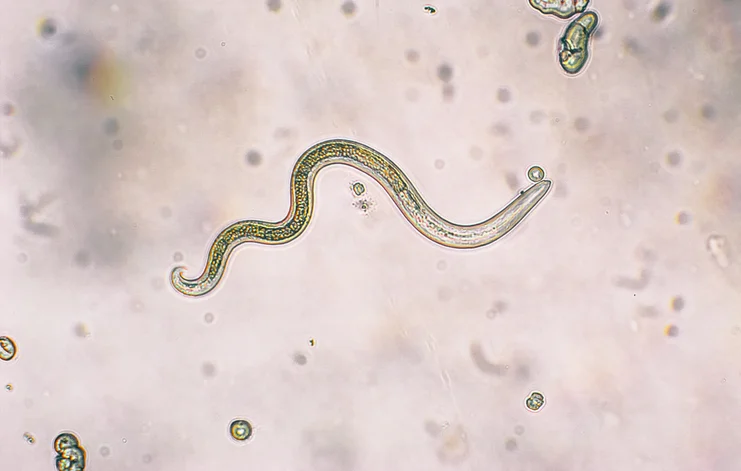
Parasitic infections affect millions of people globally. They have a significant negative impact on a person’s health. It is possible to have parasites, but it must be noted that it is rare in the United States to have the large, worm-like parasites portrayed on social media. “Cures” sold online may cause more harm than good to someone who truly does not have a parasite.
Let’s look at different types of parasites, what an infection may look like, and why parasite cleanses can be harmful. Social media health recommendations may not always be what it seems.
What is a parasite?
A parasite is an organism that lives off a host, but doesn’t contribute to the host’s well-being. Although parasites aren’t trying to kill their host, there are negative consequences to the parasite’s presence.
More often than not, when we think of a parasite, we imagine some kind of nasty worm inside someone’s intestines. While this isn’t wrong, it’s not entirely accurate.
There are three main types of parasites, and two of the types aren’t worm-like at all.
Ectoparasites
These are the ones that live on the outside of your body, on your skin. Fleas, ticks, mites, scabies, and lice all fall into this category. They may transmit diseases (or other parasites) to you through their bites, but they themselves do not go past your skin.
Protozoans
These are one-celled organisms that live in the blood or tissues. There are quite a few different types, like amoebas, ciliates, and flagellates. They cause illnesses like Giardia, malaria, or dysentery. Some protozoa cannot be seen with the naked eye; you need a microscope.
Helminths
“Helminth” comes from the Greek word for worm. These are the classic parasites you think of: tapeworms, flukes, pinworms, etc. It’s important to note that you can only see helminths when they’re adults. At other stages in their lives (like eggs or larvae), you would need a microscope to see them.
How do you get infected by a parasite?
There are a few ways that someone can be infected by a parasite.
- Drinking or eating contaminated food or water: Consuming water from a contaminated source without boiling or treating it may infect someone with a parasite. Undercooked meat or fish and unwashed produce from a contaminated source may do the same.
- Fecal-oral route: This is when someone transfers a parasite from fecal matter to something you would consume. This may happen if someone does not wash their hands after using the restroom or handling animal droppings, then goes on to prepare/eat food.
- Environmental transfer: Sometimes a parasite may enter the body if exposed to an environment known to be contaminated with parasites. This could look like swimming in a contaminated lake, walking barefoot in soil with larvae, etc. Places with known parasites often have signs and warnings posted; be sure to check with local resources when traveling.
How common are intestinal parasites in the United States?
Intestinal parasites potentially affect millions of people in the United States, but that varies across species and geographic areas. Social media often takes that claim and makes it seem like millions of people have large worms inside them. Let’s unpack this.
Like all organisms, parasites have specific areas of the world where they live (i.e., are endemic). For example, Chinese liver flukes (Clonorchis sinensis) live in southeastern Asia. It is rare to have an infection from this animal in the United States unless you traveled to that area. However, it is possible to see influencers marketing detoxes for this specific parasite to Americans.
There are other parasites that live in the US that you should be aware of. For example, Toxocara spp. is a parasitic roundworm that targets cats and dogs. If a human accidentally consumes cat or dog feces with Toxocara eggs/larvae, that person may become infected with toxocariasis. Children are the most at risk as they may play in or eat contaminated dirt, litter from a cat’s litter box, etc. More research is needed to figure out just how many Americans have an infection, but some reviews suggest it could be around 13% of the population.
Toxocara never becomes a visible, adult worm when it infects a human being. This is true for other parasites in North America, like Giardia, Cryptosporidium, and Cyclospora. Pinworms are the exception, but they are not big (6-13 millimeters).
What is a parasite cleanse?
Parasite cleanses are blends of supplements, oils, and herbs that are marketed as anti-parasitics. They often take a few weeks to complete, but some are meant to be continuous. Some recommend taking only a short break before beginning another course.
Some of the ingredients on their own may truly be anti-parasitic. In fact, some have been shown to be helpful in treating infections (more on this below). However, there is no hard scientific evidence supporting these weeks-long “detoxes” sold by online vendors who are not medically licensed.
The “Mucoid Plaque”
Some cleanses have many strong laxatives in them. These laxatives stimulate the colon and may cause the lining of the colon to shed. This lining can be long and ropey— eerily similar to a worm. Unfortunately, this encourages participants to continue “cleansing” as they believe they are infected with “parasites.”
Seeing large, adult intestinal parasites in the stool is a sign to see a medical provider right away, not to continue with a natural cleanse.
Alternative-health providers may call this shedding of the colon lining the “mucoid plaque.” This is not a medical term, and there is no proven health benefit of shedding mucus from the colon. Your intestines need a healthy amount of mucus to sustain their natural microbiome.
Do I need a parasite cleanse?
While it is fully possible to have a parasite, the extreme cases of intestinal parasites portrayed on social media typically only happen when someone has been traveling outside the United States in areas prone to parasitic infections, or they work extensively with animals and around animal feces.
Before purchasing a “cleanse” online, talk to a healthcare provider first. There’s no evidence that parasite cleanses work, and trusting them to treat a real infection is a dangerous risk to take.
Moreover, there may be a separate underlying issue that is not a parasite and needs attention. Self-diagnosing a parasite could delay important healthcare.
If you do have an intestinal parasite, there will likely be several of the following symptoms:
- Severe gas, bloating, and/or diarrhea
- Vomiting
- Fever
- Skin rashes
- Itching near the anus, typically at night
- Unexplained weight loss
- Fatigue
- Joint pain
- Possible anemia
Having an intestinal parasite is a notable medical condition. It’s important to find out what species you have in order to get the most effective care. A stool and blood test from a medical provider will help determine the best treatment for you.
Are the parasite cleanses I see on social media safe?
Experiencing symptoms like joint pain, excessive bloating, or diarrhea is definitely something to be concerned about. The problem here lies in self-medicating with potentially dangerous substances for far longer than is medically recommended.
Many of the “remedies” influencers are pushing may cause damage to your liver or kidneys if taken for too long (like in a month-long “detox course”).
The ingredients in parasite cleanses are not necessarily toxic, but can be in large or continuous doses. Additionally, they may interact with other medications.
Let’s take a look at a few common ingredients in these cleanses:
Senna and other laxatives
Many online parasite cleanses encourage taking large amounts of laxatives, like senna, aloe vera, Cascara sagrada, and rhubarb root. Although these are all plant-derived, they may still have a strong effect. Taking laxatives in excess may lead to malnutrition, loss of electrolytes, and potential organ damage.
Wormwood
Wormwood (Artemisia absinthium) is a small shrub that’s been used to treat many different ailments for hundreds of years. It is the main herb in the drink absinthe. It has a chemical called thujone, which may be toxic in very large amounts. Supplements like this are not regulated by the Food and Drug Administration (FDA); safety and the long-term effects of wormwood use are unknown. Its ability to specifically fight parasites is also unknown.
Papaya Seeds
Dried papaya seeds have been part of some intestinal parasite cleanses. The duration of use and proper dosing are still unclear. Eating papaya seeds can have some negative effects such as stomach upset, diarrhea, and possible allergic reaction. It is important to seek medical guidance if you suspect intestinal parasites.
Have a question we didn’t cover? Call the Missouri Poison Center
Symptoms of parasitic infections may overlap with other health problems, like irritable bowel syndrome (IBS). Managing symptoms from chronic health conditions can be quite frustrating, and it’s understandable why someone may want to turn to one of these products for help. But parasite cleanses may create new problems instead of solving anything.
If you have questions about parasite cleanses, or if you’ve done one and are curious about the effects and ingredients, call the Missouri Poison Center at 1-800-222-1222. Every call is free and confidential. We’re open 24/7 to answer your poison-related questions.
Frequently Asked Questions
Some mild parasitic infections may resolve without treatment, but many do not. Without proper medical care, certain parasites can remain in the body for months or years and cause long-term complications. Relying on symptoms to disappear instead of seeking testing may allow an infection to worsen over time.
No, stress and poor diet do not cause parasitic infections. However, they can weaken the immune system, which may make it harder for the body to fight infections. This can sometimes worsen symptoms if a parasite is already present.
Yes, pets can carry certain parasites that may infect humans, especially if proper hygiene is not followed. Regular veterinary care, handwashing after handling animals, and safe disposal of pet waste can greatly reduce this risk.
Treatment typically involves prescription medications that target specific parasites. The type and length of treatment depend on the species involved and the severity of infection. Most people respond well to proper medical treatment and recover fully when diagnosed early.
Referencing content from this page? Please attribute the Missouri Poison Center with either of these links:
https://missouripoisoncenter.org/ or https://missouripoisoncenter.org/parasite-cleanse/
Suggested APA citation:
Hazelbaker, H.J. (2026, February 23). Myths and facts about parasite cleanses. Missouri Poison Center. https://missouripoisoncenter.org/parasite-cleanse/