
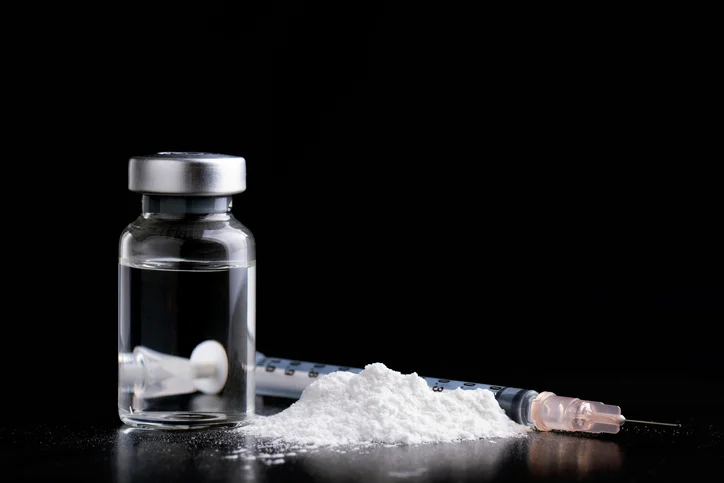
Recreational drugs contain numerous adulterants. It is thought that these substances are intentionally added to the illicit drug supply to heighten or prolong desirable symptoms of intoxication, as well as to simulate the effects of the primary agent at a lower cost. Adulterants vary widely based on the individual drug and the region. They also change over time as drug supplies fluctuate.
Medetomidine is an emerging drug adulterant that is replacing xylazine on the East Coast and is now starting to be detected in other regions across the United States.
HISTORY
Medetomidine is a veterinary sedative that has been used since the 1980s. There are no approved human uses. However, we are familiar with dexmedetomidine (Precedex), which is widely used for IV sedation. Medetomidine is simply a racemic mixture of dexmedetomidine (more active) and levomedetomidine (less active). It is thought to enhance the euphoric and sedative effects of opioids, which may explain its intentional use as an adulterant.
Medetomidine was first identified in the illicit opioid supply in Maryland in 2022. Since that time, medetomidine has been detected in several states, including Missouri. Reports of both medetomidine intoxication and medetomidine withdrawal are highest along the East Coast. Historically, illicit drugs and associated adulterants first found on the East Coast spread in a predictable pattern, becoming more prevalent in the Midwest and South before they are later more frequently seen along the West Coast.
MECHANISM OF ACTION & TOXICITY
Medetomidine exerts sedative and sympatholytic effects via α2 receptor agonism in the central nervous system. When compared with other α2 receptor agonists, such as clonidine and xylazine, medetomidine is both more selective for α2 versus α1 receptors and is much more potent. Significantly increased α2 selectivity translates into a characteristic clinical profile of hypotension, bradycardia, sedation, relief of anxiety, analgesia, and hypothermia, with less counterregulatory action from α1 receptor stimulation. However, in significant medetomidine overdose from the large quantities found in illicit drugs, enough α1 receptor stimulation may occur to produce hypertension before the withdrawal of sympathetic tone produces hypotension. Additionally, overdose of central α2 receptor agonists adds to the profound respiratory depression of opioids, which increases risk of fatality in unattended users.
SYMPTOMS OF ACUTE TOXICITY
Most patients who are exposed to medetomidine-adulterated drugs are seeking illicit opioids and thus patients essentially always have co-exposures to opioids. The clinical symptoms of the two intoxications overlap, but only those caused by the opioid can be reversed by an opioid antagonist, such as naloxone.
After naloxone reverses opioid effects, the symptoms of medetomidine intoxication remain. These include miosis, bradycardia, possibly hypertension followed by hypotension, and persistent, prolonged sedation but with intact respiratory drive. As medetomidine testing is rarely available, medetomidine intoxication is a clinical diagnosis.
TREATMENT OF TOXICITY
Fortunately, most patients presenting with acute opioid plus medetomidine exposures recover from intoxication after naloxone and a period of observation in the Emergency Department. There is no antidote for medetomidine approved in humans at this time.
Most patients only need supportive care. As with any patient, take a stepwise approach and first consider the airway. Simple interventions such as elevating the head of the patient’s bed may be all that is necessary, although some patients may require more aggressive measures. If respiratory depression is observed, the default assumption is that the patient is currently affected by opioids, and naloxone should be administered. The goal is to restore adequate respiratory effort, not titrate to alertness. Naloxone will not reverse medetomidine-associated sedation. Bradycardia is common. Hypotension may occur as heart rates dip into the 30s to 40s; however, IV fluids are usually sufficient to improve blood pressure, and vasopressors will not be needed. Patients should be observed until their symptoms resolve.
MEDETOMIDINE WITHDRAWAL
Medetomidine withdrawal is a clinical syndrome that was first described in 2024. Hyperadrenergic symptoms begin as soon as 4-6 hours after the last use of illicit drugs, but may be delayed up to 24 hours. Patients may present with severe hypertension and tachycardia, agitation, delirium, tremor, diaphoresis, chest pain, and intractable nausea and vomiting.
Overall, medetomidine withdrawal is similar to severe withdrawal from alcohol or benzodiazepines, but there are important differences. It progresses very quickly compared to other withdrawal syndromes, reaching peak intensity 18-36 hours after onset. Response to GABA agonists such as benzodiazepines and barbiturates is not as robust. Opioids likewise do not improve symptoms, although they will help manage concurrent opioid withdrawal. Like medetomidine intoxication, medetomidine withdrawal is a clinical diagnosis. Vomiting refractory to multiple antiemetics is suggestive of medetomidine withdrawal.
In early reports of medetomidine withdrawal, many of these patients needed admission to the intensive care unit for symptom management. Some patients with severe withdrawal have developed serious complications such as posterior reversible encephalopathy syndrome (PRES) and troponin elevations consistent with NSTEMI.
MANAGEMENT OF MEDETOMIDINE WITHDRAWAL
Recommendations are based primarily on clinical experience. Published treatment regimens consist of early simultaneous administration of multiple α2 agonists – clonidine (both oral and transdermal), guanfacine, and tizanidine are all possible options. Benzodiazepines or barbiturates may be beneficial as adjunctive sedatives, but are not expected to be effective in isolation. Vomiting seems to be more responsive to IV dopamine antagonists (e.g., prochlorperazine or droperidol) as opposed to ondansetron.
Despite aggressive initial care and frequent antiemetics, patients may not tolerate oral medications, and IV dexmedetomidine may be necessary for persistent or worsening symptoms. After initial symptom control is achieved with dexmedetomidine, it is tapered over multiple days.
It is also reasonable to assume that patients in medetomidine withdrawal have a history of illicit opioid use and may be exhibiting concurrent opioid withdrawal. Withdrawal management and medications for opioid use disorder (MOUD) should be considered as well.
ADDITIONAL HELP
Medetomidine exposures can be difficult to diagnose and treat given the constantly changing illicit drug market. Our advice is to contact the Missouri Poison Center where you can receive the most current management advice on common and uncommon exposures.
The Missouri Poison Center is available round the clock to assist in managing patients. Our specially trained nurses, pharmacists, and toxicologists can provide the most up-to-date information regarding exposures and treatment. For patient-specific guidance, please contact the poison center’s dedicated line for healthcare professionals at 1-888-268-4195
This Poison Alert was developed with contributions from Dr. Jessica Winkels.
References
London KS, Huo S, Murphy L, et al. Severe Fentanyl Withdrawal Associated With Medetomidine Adulteration: A Multicenter Study From Philadelphia, PA. J Addict Med. 2026;20(2):231-237. doi:10.1097/ADM.0000000000001560
Lynch MJ, Pizon AF, Yealy DM. Emergence of Medetomidine in the Illicit Drug Supply: Implications for Emergency Care and Withdrawal Management. Ann Emerg Med. 2026;87(6):709-716. doi:10.1016/j.annemergmed.2025.12.004
Murphy L, Krotulski A, Hart B, Wong M, Overton R, McKeever R. Clinical characteristics of patients exposed to medetomidine in the illicit opioid drug supply in Philadelphia – a case series. Clin Toxicol (Phila). 2025;63(6):438-441. doi:10.1080/15563650.2025.2500601
Stolbach A, Culbreth R, Falise A, et al. Medetomidine-Involved Overdoses Among Emergency Department Patients: Results From a US Multicenter Sentinel Surveillance Program. J Addict Med. Published online February 11, 2026. doi:10.1097/ADM.0000000000001665