
Skip to content

Pokeweed

Medium Risk

Also known as:

American Pokeweed Crowberry Inkberry Pigeonberry poke poke berries poke root poke salad poke sallet pokeweed red weed scoke

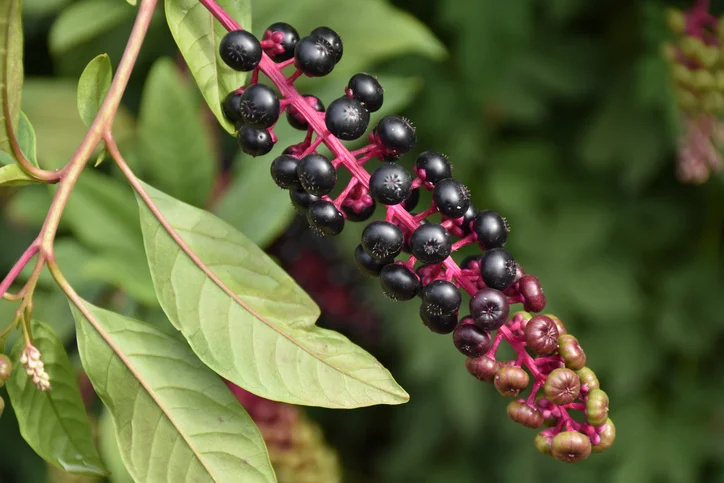
Pokeberries ripening on a pokeweed plant. Some berries are fully ripe and others are not.

Possible Symptoms

  • Increased saliva, with nausea and vomiting
  • Abdominal pain and cramping
  • Diarrhea, which can be frothy or foamy
  • Can see gastrointestinal bleeding with significant ingestion

What to Do

  1. Wipe or rinse out mouth.
  2. Give a serving size of water to drink.
  3. Rinse any exposed skin with lukewarm water.
  4. Call 1-800-222-1222 for additional instructions.

Additional Information

Quick Facts About Pokeweed:

American Pokeweed (Phytolacca americana) is a perennial herb native to Missouri. The plant first sprouts in the early spring and can grow to 5-10 feet tall. The plant produces tiny white and green flower clusters, which develop into green-colored berries. As the berries mature, their color changes from green to red and then to a deep purple. By the end of the season in the fall, they have a very dark, usually shiny, black appearance. The stems grow rapidly and are smooth and hollow, changing color with time. They start out being green and change to red or purple.

All parts of the plant are potentially toxic, with the root being the most toxic. As the leaves and stems mature, they become more toxic; however, the berries are the opposite. The white and green unripe berries contain more toxins than the ripe purple and black berries.

Skin Exposure

When handled, the root, stems, and leaves can cause a warm sensation, stinging pain, and skin irritation, known as pokeweed rash. After handling, the exposed skin should be washed thoroughly with soap and rinsed well with water to avoid skin irritation and rash. This is especially important if the exposed skin is broken, as the toxin can be absorbed through the damaged skin.

Ingestion

Pokeweed contains several active compounds, including soap-like saponins, oxalic acid, and direct gastrointestinal irritants. The effects of ingestion are generally self-limiting but can be severe. Symptoms may include nausea, vomiting, salivation, abdominal pain, cramps, and diarrhea. Effects generally last 1 to 24 hours but can last up to 48 hours. The primary risk in these cases is dehydration resulting from fluid loss. In severe cases, it can lead to a drop in blood pressure.

Common calls to the poison center involve small children who eat berries while exploring their environment outside. A telltale sign the child has handled the berries is purple staining on the hands and in and around the mouth. Children love to squish the berries and do a taste test. Although they appear to be juicy and sweet, the berries are tart, so this usually limits the amount the child will eat. Small tastes of the ripened berries typically have minimal symptoms; there may be some stomach upset and limited vomiting, but significant symptoms are not expected.

Pokeweed Salad

Another call the poison center receives is when adults prepare and eat “poke salad,” sometimes referred to as “poke sallet,” which is a cooked salad. What is old is new again! This was common in the South and the Appalachian region. Today, it is popular for foragers and homesteaders to return to these practices of the past.

There is a method to remove toxins from the leaves, but it requires meticulous cooking steps that must be followed in a specific order to ensure the toxins are effectively removed. Even with the most cautious preparation, there is always increased concern when the salad is ingested by the elderly, the immunocompromised, young children, or pregnant women. It is best practice to avoid eating any part of the pokeweed plant. For those who choose to eat poke salad, it is essential to be familiar with the process of removing the toxin and follow the directions carefully to avoid the unwanted side effects.

Do not panic if you find someone has eaten pokeweed or another part of the plant. If a young child ingests it, wipe out the mouth with a soft, wet cloth and give them some water to drink. If the plant has been handled, be sure to wash the exposed skin with soap and rinse well with water. It is best to call the Missouri Poison Center immediately at 1-800-222-1222, so the proper first aid recommendations can be provided, and the poison center can make follow-up phone calls to check on the development of any symptoms. The poison center is open all day, every day, for poisoning emergencies and questions.

**Note: Don’t forget, every case is different. To make sure you are getting the best information for your individual situation, click below to call or chat. It is fast, free, and confidential.

Take The Missouri Poison Center With You

Emergencies don’t wait for you, so you shouldn’t have to wait to call for help. Get the Missouri Poison Center app with poison information and a link to the Poison Help Line. It is just a click away during the most stressful moments. Our registered nurses and pharmacists are here 24/7/365 days a year to help guide you through poison exposures and overdose emergencies.

Don’t wait. Download now.

Smartphone screen showing the Missouri Poison Center Poison Help app icon alongside other standard apps

Cart
Call Now