
INTRODUCTION
Let the buyer beware; let the doctor beware.
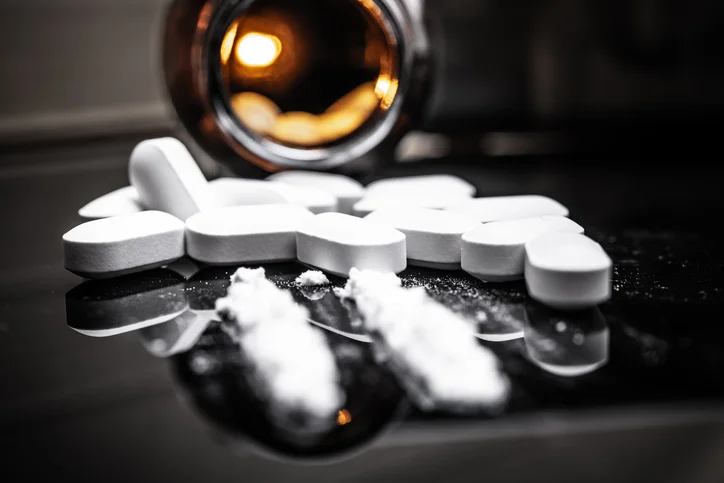
Anything now sold as heroin is almost certainly augmented by fentanyl or replaced by fentanyl. But that’s just the beginning of the story, one that evolves every month. Not only the users of illicit drugs, but also the health care practitioners who treat their overdoses should know the prevalent adulterants that can contribute to their toxicity and complicate clinical management. What are some of the agents found in contemporary street drugs in Missouri? For example, do we have BTMPS?
A LOOK BACK IN TIME
Since the beginning, when recreational drugs were first sold in illicit markets, they were “cut” with substances meant to increase the merchant’s profits. Dosing accuracy was, and remains, nonexistent, and there were many unintentional overdoses when the current batch was unexpectedly potent compared to what everyone was accustomed to.
For heroin, which is a bitter alkaloid, the traditional diluent was something bitter such as quinine, caffeine, or strychnine, so that the product could pass the taste test conducted at “point-of-sale.” For cocaine, it might have been lidocaine or diphenhydramine, which will numb the tongue as cocaine does. Perhaps the goods were cut with lactose, boric acid, or talc. Marijuana could be adulterated with a mercury compound to surreptitiously increase its weight. Some of these adulterants are relatively benign and offer no appreciable additional toxicity, and some are not benign.
More recently, adulterants with significant pharmacologic activity have been used as cutting agents or perhaps as intentional adulterants. Examples include 1) Levamisole, an immune modulator, in cocaine, which induces vasculitic skin necrosis; 2) Clenbuterol, a beta-2 agonist, in both heroin and cocaine, which causes adrenergic symptoms of tachycardia, tremor, hypotension, chest pain, and rhabdomyolysis; 3) Xylazine, a central alpha-2 agonist similar to clonidine, which causes a “zombie-like” sedation, bradycardia, hypotension, and alpha vasoconstriction-induced ischemic necrosis; and 4) Medetomidine, comprised of dexmedetomidine and its racemic “es” twin, which also causes a “zombie-like” sedation, bradycardia, and hypotension.
These adulterants were not likely a disinterested choice or selected due to sheer convenient availability. The selection appears to be intentional to add desirable attributes to the composition of illicit recreational drugs. The goal is to enhance the recreational experience by prolonging, altering, or adding to the effects. And that brings us to the present.
FAST FORWARD TO 2025 – BTMPS
In mid-2024, a chemical abbreviated as BTMPS was noticed in an analysis of illicit fentanyl samples in Philadelphia. It was detected in 5 other states within weeks, and in almost all states by December 2024, including Missouri.
BTMPS is Bis(2,2,6,6-tetramethyl-4-piperidyl) sebacate. It is an industrial chemical (brand name, Tinuvin 770) used as a stabilizer in plastics to slow degradation by UV light. Its presence in laboratory and medical plastics and packaging of pharmaceutical products has caused some consternation, but this is another issue.
BTMPS has been identified primarily in samples of fentanyl and other synthetic opioids (e.g., para-fluorofentanyl), alongside other adulterants, such as medetomidine and xylazine. In a study of fentanyl samples, two-thirds had more BTMPS than fentanyl, and 14% had 10 times more BTMPS than fentanyl. BTMPS has also been found in samples of stimulants such as methamphetamine and cocaine, albeit most also having fentanyl mixed in.
THE FIRST QUESTION IS, “WHY IS IT THERE?”
The marketers’ rationale is not known at this point, but there may be a pharmacologic reason why BTMPS is being intentionally added to fentanyl. It is a non-competitive antagonist at certain types of cerebral nicotinic acetylcholine receptors, which are known to cross-talk with opioid receptors.
In studies that enabled rats to press a bar to get IV morphine as often as they liked, it appears that BTMPS interfered with the development of tolerance to the morphine, so that the treated rats were satisfied with fewer morphine doses than control rats. BTMPS also reduced withdrawal symptoms in the rats once their supply was turned off.
These drug actions would likely have appeal to human users, so that they do not need to re-dose so often or continually seek higher doses, and when they are out of supply, the withdrawal will not be so bad.
THE SECOND QUESTION IS, “WHAT IS THE POTENTIAL HARM?”
The pharmacologic bad news is that BTMPS is an active and potent L-type calcium channel blocker with a dihydropyridine structure, similar to nifedipine and amlodipine.
A study in dogs (average weight 52 pounds) was conducted in which BTMPS was given intravenously to groups of dogs at escalating doses of 1 mg, 3.3 mg, 6.6mg, 10 mg, 33.3 mg, 66.6 mg, and 100 mg. Effects were dose-related.
- At doses 1-10 mg, systolic and diastolic blood pressures, mean arterial pressure, and ventricular contractility were decreased (statistically significant) but without significant changes in cardiac output, heart rate, or EKG intervals (i.e., primarily peripheral vasodilation).
- At doses of 33 mg and 66 mg, clinically significant declines in blood pressure and myocardial contractility were observed.
- At doses of 66 and 100 mg, heart rate and cardiac conduction also decreased substantially. Irreversible circulatory failure occurred in one dog after a 66 mg dose and in 8 of 10 dogs following a 100 mg dose.
There is little clinical correlation in humans. No information is available that addresses whether calcium channel blocking effects are being seen in users of this BTMPS-adulterated fentanyl. Theoretically, the potential is there if the dose is high enough. Potential neurotoxicity is also an issue since it is an antagonist at cerebral nicotinic receptors, and possibly has uncharacterized actions at other sites as well.
THE THIRD QUESTION IS, “WHAT IS BEING REPORTED IN USERS?”
Again, information is scarce. Symptoms obtained from users who ingested it include blurred vision, burning eyes, tinnitus, nausea, and coughing. It is also said to burn when the adulterated illicit drug is injected. Users also report a chemical smell, similar to plastic or bug spray.
THE FINAL QUESTION IS, “WHAT ELSE IS GOING AROUND?”
Drug patterns typically vary by region, so it is difficult to say what drugs are dominant for the entire state. However, there are several regional surveillance projects that analyze drug and paraphernalia samples. In the St Louis area, project EAGLE FANG (Evidence and Biological Gathering for Laboratory Evaluation and Forensic Analysis of Novel Drugs) is conducted by the Saint Louis County Department of Public Health in collaboration with SSM SLUCare Physician Group Toxicology Laboratory. Samples are anonymously provided by community-based organizations involved in the care of individuals with substance use disorders, as well as drug samples from the Saint Louis County Department of Justice Services. The results can be a real eye-opener.
Most samples tested positive for multiple substances. Between April and June 2025, BTMPS was found in 38% of samples, usually with fentanyl. The top 10 drugs detected were:
1) cocaine (77%),
2) ketamine (68%),
3) fentanyl (63%),
4) methamphetamine (62%),
5) lidocaine (60%),
6) diphenhydramine (58%),
7) xylazine (52%),
8) acetaminophen (48%),
9) quinine (43%),
10) acyl fentanyl (43%).
It is clear that illicit drug overdoses are not necessarily unidimensional. The best advice is always to treat what you see, and don’t be surprised if you see more than you expect. If you encounter a case that was clearly related to a street drug overdose, especially fentanyl, that develops hypotension and bradycardia or neurotoxicity, or complains of a plastic or bug spray odor, consider BTMPS a possibility.
CALL TO ACTION
Maintain contact with the Missouri Poison Center to take advantage of our most up-to-date information on the illicit drugs in the community. Our specially trained nurses, pharmacists, and physician toxicologist can provide consultation regarding exposures and treatment. For patient-specific guidance, please contact the poison center’s dedicated line for healthcare professionals at 1-888-268-4195.