
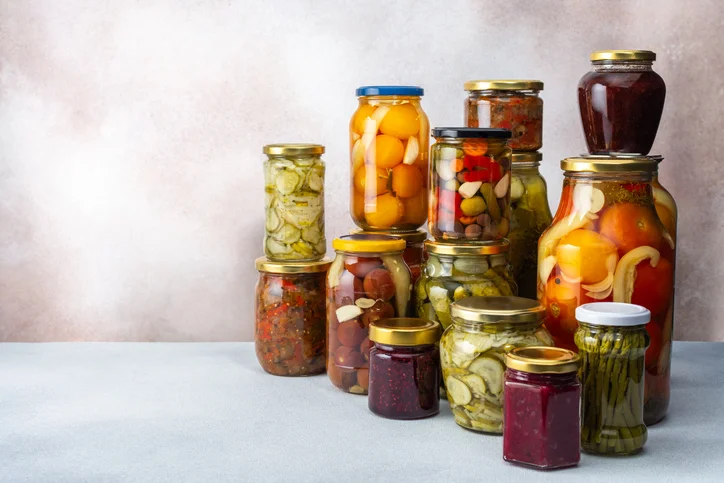
Canning season is upon us, so it’s important to understand one of the possible dangers of home food preservation: botulism. Although it’s quite rare, botulism may be deadly. Properly preserving canned foods is critical to keeping you and your loved ones safe. Here’s what you can do to keep home canning and fermenting fun and safe.
What is botulism?
Botulism is a rare but dangerous condition caused by the toxin botulinum. A few different bacteria produce this toxin, with the main one being Clostridium botulinum. When this type of bacteria is exposed to the right conditions, it may produce the toxin that causes botulism.
The most common ways someone may be exposed to the toxin are through improperly canned/preserved food, through a wound, or if the bacteria grow in an infant’s intestines.
Best Conditions for Botulinum Toxin Growth
The bacteria for botulism are quite common in nature. They are present on the surface of many fresh food sources, as well as in soil and freshwater sediment. These bacteria create spores which help protect and spread the bacteria. These spores, under the right circumstances, produce the botulinum toxin.
The reason you can eat something like a fresh peach without generally being harmed by the bacteria and their spores is that they are not in an ideal environment to produce the toxin.
Let’s take a look at the conditions that need to be met to create the botulinum toxin:
- Very low or no oxygen
- Low acid environment
- Enough moisture/low enough concentrations of salt and/or sugar
- Temperatures that allow for bacterial growth
These conditions have a lot in common with food preservation through canning and fermenting.
Botulism Symptoms
Symptoms of botulism may take between a few hours and two weeks to appear. Symptoms typically affect both sides of the body. These may include:
- Abdominal pain
- Drooping eyelids
- Muscle weakness
- Trouble swallowing or speaking
- Blurry vision
- Double vision
- Dry throat
- Nausea and/or vomiting
What are the signs of botulism in babies?
Although not fully understood, sometimes babies get botulism. This is one of the reasons why you should not feed honey to an infant under the age of one.
Infant botulism is a medical emergency. Constipation is often an early sign, followed by feeding and muscle-control changes. Seek medical attention if a baby develops symptoms like:
- Fewer bowel movements
- Poor feeding or weak sucking
- Trouble swallowing
- A weak, unusual, or altered cry
- A “floppy” appearance
- Drooping eyelids
- Pupils that react slowly
- Worsening weakness or reduced movement
- Breathing difficulty
Does heat kill botulism?
Yes. There are three things to keep in mind here: the bacteria, their spores, and the botulinum toxin.
The bacteria may be killed with normal cooking and boiling temperatures. These are typically about 176-212 degrees Fahrenheit. Water boils at 212 degrees.
Heat breaks apart the botulinum toxin, destroying it. If you are at sea level, boiling food for 10 minutes accomplishes this. For every 1000 feet above sea level, add an extra minute. So if you live at 3000 feet above sea level, boil for at least 13 minutes.
The spores, however, are hardy. They require much higher temperatures to die, starting at 240 degrees Fahrenheit. This is hotter than boiling water. There are other ways to prevent the spores from creating the toxin, which affects the method for canning food at home.
How to Prevent Botulism When Canning Food
The key to preventing botulism in canned food is properly processing the food and making the conditions inhospitable for the spores and bacteria.
Although canned foods need to have low oxygen and remain at a certain temperature range, you can help prevent botulinum growth by increasing the acidity of the food, as well as killing the spores before sealing.
Trying to guess whether a food is “acidic enough” or “salty enough” is dangerous. Botulism prevention involves using a tested, food-specific recipe along with the recommended canning method.
Foods considered to be low in acid have a pH above 4.6. These include:
- Meat
- Poultry
- Seafood
- Most vegetables
- Some tomatoes
- Figs
Adding things like citric acid, lemon juice, or vinegar makes the foods more acidic, which helps deter the botulinum toxin. However, never improvise or guess a recipe when it comes to home preservation.
Foods that are properly acidic— like most berries, lemons, pickles, and acidified sauces— may be canned using the boiling or water-bath method for can sealing. This method is okay because the food is acidic. Boiling kills the bacteria, and the acidity helps prevent the spores from producing the toxin.
Low-acid foods must be pressure canned. This is when the cans are placed in a pressure canner that heats them with steam to temperatures of 240 degrees or higher. Low-acid foods must be prepared this way because they do not have the benefit of acidity, so the spores need to be killed off completely with high temperatures.
What does botulism look like?
It is difficult to tell if food has the botulinum toxin as it has no taste or smell. Even a small taste of improperly preserved food may result in dangerous side effects.
There are a few visual signs that canned food may be spoiled, but not necessarily from the toxin. These include cans that are:
- Bulging
- Leaking
- Spraying liquid or foam
- Giving off a foul smell
- Discolored
- Moldy
If you suspect something may be wrong with the food, it’s best to throw it out instead of taking a risk.
Is botulism curable?
Botulism may be treated if acted upon quickly. The antitoxin can neutralize the toxin in the body. While this prevents further damage, the antitoxin cannot reverse what has already happened. Recovery may take months to years because the body needs time to repair the damage caused by the toxin.
If you have questions about botulism, call the Missouri Poison Center at 1-800-222-1222. We are open all day, every day to answer your poison-related questions.
If you suspect that someone you know has botulism and is experiencing symptoms like paralysis or trouble breathing, call 911 immediately.
Frequently Asked Questions
Usually, spoiled milk is not a typical source of botulism. Ordinary pasteurized milk that has gone bad is more likely to contain other spoilage organisms, not the low-oxygen conditions that favor C. botulinum growth and toxin production. You can learn more about spoiled milk in our helpful article here.
Botox treatment is not the disease botulism, but it is made from botulinum toxin. Botox is a regulated pharmaceutical product containing purified, highly diluted botulinum neurotoxin type A. In carefully controlled medical or cosmetic doses, clinicians use it to temporarily relax selected muscles.
Honey is generally safe for adults and children older than 12 months. The concern is specifically for infants under 1 year old, because honey can contain Clostridium botulinum spores. In some infants, those spores can grow in the intestines and produce the toxin, causing infant botulism.
Older children and adults have more developed intestinal microbiomes and digestive defenses that generally prevent the spores from growing.
No, botulism does not spread from person to person. You cannot catch it through everyday contact with someone who has botulism. Instead, people develop botulism after exposure to botulinum toxin or, in some cases, after spores grow in the intestine of an infant or enter a wound. That said, if several people ate the same improperly preserved food, more than one person may become ill from the shared food exposure.
Referencing content from this page? Please attribute the Missouri Poison Center with either of these links:
https://missouripoisoncenter.org/ or https://missouripoisoncenter.org/botulism
Suggested APA citation:
Hazelbaker, H.J. (2026, October 12). How to protect yourself from botulism in canned food. Missouri Poison Center. https://missouripoisoncenter.org/botulism